

CGC vs Raw Comics: Is Grading Worth It? (ROI Calculator Guide)
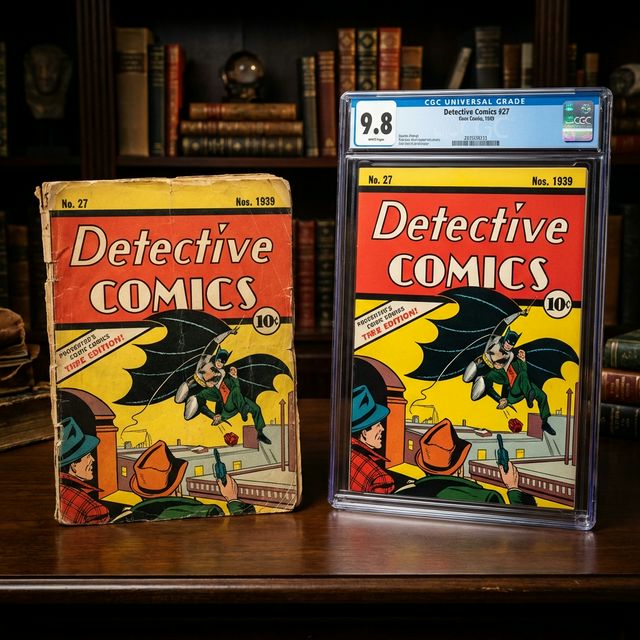
If you’ve spent any time on eBay or at a comic convention recently, you’ve seen them: those thick, clear plastic cases with a colorful label at the top. These are “slabs,” and they represent the biggest divide in the modern comic collecting world.
On one side, you have the Raw Collectors. They like the feel of the paper, the smell of the ink, and the ability to actually read the book they bought.
On the other, you have the Graded Investors. They see comics as assets, and they want a third-party guarantee of condition and authenticity.
The question is: Which one should you be? And more importantly, when is it actually worth spending the $30-$100+ to get a book graded?
What is CGC Grading?
CGC (Certified Guaranty Company) is the industry leader in third-party comic grading. When you send them a book, a team of professional graders examines it for flaws, assigns a numeric grade from 0.5 to 10.0, and “slabs” it in a tamper-evident holder.
The ROI: When Grading Makes Sense
Grading isn’t a magic button that makes every comic worth more. It’s a tool for liquidity and price certainty.
1. High-Value Key Issues
If you have an Amazing Fantasy #15 (1st Spider-Man), you must grade it. The difference between a 4.0 and a 5.0 grade on that book is tens of thousands of dollars. A buyer isn’t going to take your word for it—they want the CGC label.
2. High-Grade Moderns
Modern books (1980s-Present) are common in raw form. However, a CGC 9.8 (Near Mint/Mint) copy of a modern key like Edge of Spider-Verse #2 (1st Spider-Gwen) can sell for 5x to 10x the price of a raw copy. In this case, the slab is the “proof” that the book is perfect.
3. Verification of Restored Books
If you suspect an old book has been repaired (color touch, glue, etc.), CGC will catch it. A “Purple Label” (restored) book is worth significantly less than a “Blue Label” (universal), but having the truth is better than getting a return from an angry buyer later.
When to Stay Raw
Don’t go “slab crazy.” Here is when grading is a waste of money:
- Low-Value Books: If the book is only worth $10 raw, spending $40 to grade it makes no sense. Even if it gets a 9.8, you might only break even after shipping.
- Low-Grade Moderns: A modern comic in 8.0 condition is almost always worth less than the cost of grading it.
- Reading Copies: If you bought the comic because you love the story and want to flip through it on a rainy Sunday, keep it in a bag and board.
The Cost Breakdown (The Hidden “Negative ROI”)
To see if grading is worth it, use this formula:
Raw Value + Grading Fee + Shipping (Both ways) + Insurance < Estimated Graded Market Value
If that math doesn’t work out with at least a 20% margin for error, stay raw.
Conclusion: Use Data to Decide
At ComicValue, we see the data every day. The market for graded books is more stable, but the barrier to entry is higher. My advice? Use our app to scan your raw books first. Look at the “Sold” listings for both raw and graded versions.
If you see a massive gap—and your book looks pristine—send it in. If the gap is small, keep it raw, keep it safe, and enjoy the art.
Further Reading
- What Makes a Comic Book Increase in Value?
- Are Comic Books a Good Investment?
- How to Tell If Your Comic Book Is Valuable
- How to Find the Value of Your Comic Books
Not sure if your book is worth the grading fee? Download ComicValue for iOS or Android and compare raw vs. graded market prices instantly.
Frequently Asked Questions
Are raw comics better than CGC slabs?
It depends on your goals. Raw comics are cheaper to buy, readable, and have no grading fees. CGC slabs provide authenticated grade and condition, making them easier to sell at top dollar and better for long-term storage. For investment-grade keys, slabbing is usually worth it.
Does CGC grading always increase a comic's value?
Not necessarily. If grading fees plus shipping exceed the value difference between raw and graded, you lose money. Grading is best for high-grade keys or very rare books where the 9.8 premium is significant.
What is the break-even value for CGC grading?
A simple batch submission costs roughly $50–$65 per book all-in (tier + membership share + two-way shipping). Your comic's graded value needs to exceed the raw value by at least that amount for grading to make financial sense.
What is a 'raw' comic?
A 'raw' comic is any comic that hasn't been professionally graded and sealed in a plastic slab (like those from CGC or CBCS).
Can I take a comic out of a CGC slab?
Yes, but it instantly loses its certified grade. You would have to pay to get it re-graded to restore the label.