

How to Tell If Your Comic Book Is Valuable (7 Quick Checks)
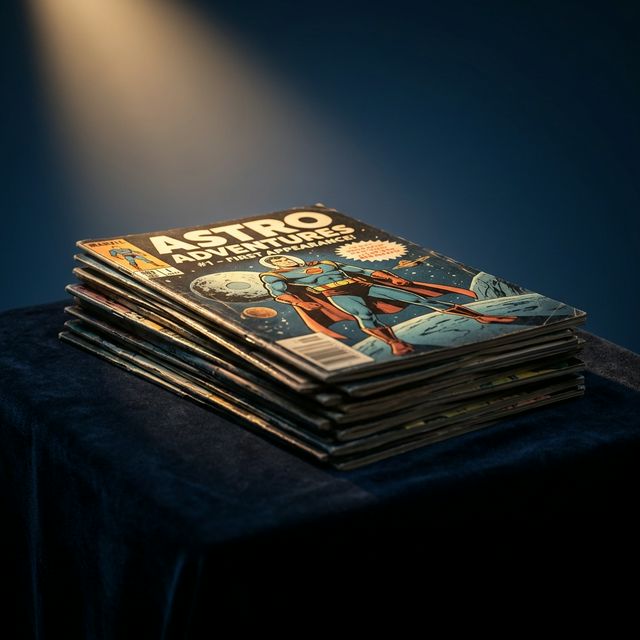
You’re standing at a garage sale. There’s a box of comics for $1 each. You have five minutes before the next guy shows up. How do you know which ones to grab?
Valuing a comic collection is hard, but identifying potential value is actually quite intuitive once you know what to look for. Most people look at the year or the character, but the real pros look at the fine details.
In this guide, I’m going to give you the “Quick Check” list that I use every time I’m faced with a box of unknown books.
1. Look for the “First Appearance”
This is the #1 rule of comic value. The first time a character appears in print is almost always the most valuable issue in their entire run.
How to spot them:
- New characters on the cover: Often, the cover will scream “Introducing…” or “The First Appearance of…”
- Key guest stars: If a major hero (like Spider-Man) appears in a minor character’s book (like Nova), it might be a key.
2. The Price Point (Age Indicator)
If you can’t find a date, look at the original cover price. It’s a great shorthand for the era:
- 10 cents: Golden Age (1930s-1950s) – Very high potential.
- 12-15 cents: Silver Age (1960s) – High potential.
- 20-25 cents: Bronze Age (1970s) – Moderate to high potential.
- $1.00 and up: Modern Age (1980s-Present) – Mostly low value, with specific “modern keys.”
3. The “Direct” vs. “Newsstand” Edition
While the ComicValue app scans the cover for instant recognition, you should still eye-ball the barcode area to identify the edition:
- Newsstand: Features a standard barcode. These were sold at gas stations and grocery stores. Because they were handled poorly and printed in lower quantities (in later years), they can be worth significantly more than the direct version.
- Direct: Usually has a logo, a character face, or even “Direct Edition” written inside the barcode box. These were sold at comic shops and are the most common version.
4. Condition: The 10-Second Test
A valuable book is only valuable if it’s together. Check the “Three Cs”:
- Cover: Is it attached at both staples? If it’s loose, the value drops by 50%.
- Corners: Are they “dog-eared” or sharp enough to cut paper?
- Colors: Is the cover faded from sitting in the sun, or are the blacks deep and the reds vibrant?
5. Check the Publisher
While Marvel and DC are the most famous, some of the most valuable “indie” books come from Image, IDW, or Dark Horse.
- Image Comics: Early 90s keys (Spawn, Savage Dragon) are very popular.
- Pre-Code Horror: If the publisher is EC, Harvey, or Fawcett, you’re looking at books from the 1950s that are highly sought after by horror fans.
6. Use Technology (The Ultimate Cheat Code)
Let’s be real. Nobody can memorize every key issue for every character. Even I have to look things up.
This is exactly why we created the ComicValue app. Instead of trying to remember if it was ASM #299 or ASM #300 that was the first appearance of Venom, you can just scan it. Our app doesn’t just look for the title; it looks for the reasons why it’s valuable. It will highlight if it’s a “Key Issue,” tell you the character debut, and show you what the last few copies sold for on the open market.
The “Lot” Strategy
If you’re buying a lot of comics, scan the top 5. If those 5 show a trend of being $10-$20 books, the person who owned the box probably knew what they were doing, and there might be more gems buried deep.
Conclusion
Telling if a comic is valuable is about training your eye to see the subtle cues. Start with the price, look for first appearances, and always be mindful of the condition.
Most importantly, don’t be afraid to use the tools available to you. The difference between a $5 bargain and a $500 score is often just a quick scan away.
Found a book you suspect is a gem? Download ComicValue for iOS or Android and find its true market worth.
Frequently Asked Questions
How do I know if my comic book is valuable?
Check for first appearances (does the cover say 'introducing' a character?), look at the original cover price (10-cent comics are Golden Age, worth checking), and assess the condition. Scan it with the ComicValue app for an instant value based on real sales.
What makes a comic book valuable?
The four main value drivers are: first appearances of major characters, low print runs (scarcity), high physical condition (grade), and current cultural relevance (character appearing in a movie or show). A book that ticks all four boxes is the most valuable.
Is a comic with no barcode more valuable?
Often, yes. Pre-1977 comics had no barcodes. In the 80s–90s, 'Direct Market' editions had a picture in the barcode box instead — these are sometimes worth less than 'Newsstand' (barcode) versions. It's case-by-case.
What is a 'Key Issue' comic?
A 'Key' is a comic that features a significant event — a first appearance, origin story, major character death, or iconic cover. Key issues are the primary drivers of value in the market.
How can I tell if my old comic book is worth money?
Look at the original cover price (10-cent = Golden Age, 12-cent = Silver Age — both have potential), check for first appearances, and assess the condition honestly. Then scan it with ComicValue or search eBay Sold Listings for that specific issue.