

What Does CGC 9.8 Mean? (And Why It Changes Value)
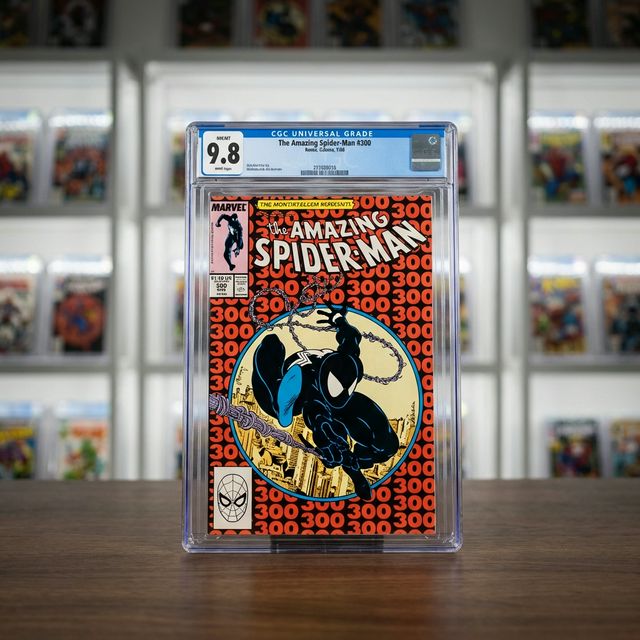
If you’ve spent more than five minutes looking at comics on eBay or high-end auction sites, you’ve seen it: a comic encased in a thick plastic shell with a big 9.8 at the top.
To the uninitiated, it looks like a regular comic in a fancy box. But to a collector, that 9.8 label is a certification of perfection (or as close to it as humanly possible).
But what actually goes into that number? And why does a 9.8 copy of a book sometimes sell for five times more than a 9.6 copy? Let’s pull back the curtain on the world of professional comic book grading.
What is CGC?
CGC stands for Certified Guaranty Company. They were the first independent, third-party grading service for comic books. Before they arrived in 1999, grading was a “wild west” of opinions. You’d buy a book that a seller called “Near Mint,” get it in the mail, and find a giant crease on the back.
CGC solved this by providing an objective, unbiased grade. They don’t buy or sell comics; they just grade them. Once a book is graded, it’s “slabbed” in a tamper-evident, archival-quality holder (often called a “slab” or “coffin” by those who prefer their books readable).
The Grading Scale
Comics are graded on a scale from 0.1 to 10.0.
- 9.0 (Very Fine): A great looking book but has some visible flaws.
- 9.2 (Near Mint-): Very close to perfect.
- 9.4 (Near Mint): The “standard” for a high-quality collectible.
- 9.6 (Near Mint+): Exceptional. Only the tiniest, almost invisible flaws.
- 9.8 (Near Mint/Mint): Virtuously perfect. No major flaws even under magnification.
- 9.9 / 10.0: Mythical. These are reserved for books with zero production flaws.
What Makes a 9.8?
To get a 9.8, a comic book has to be nearly flawless. Here is what the graders are looking for:
- Sharp Corners: No blunting or rounding.
- Tight Spine: No “spine stress” (those tiny white lines along the edge).
- Perfect Centering: The cover image must be perfectly aligned with the staples.
- Clean Surfaces: No fingerprints, smudges, or ink rubs.
- No Fading: The colors must be as vibrant as the day it was printed.
Even a “direct from the printer” book might not be a 9.8. Production errors like “staple tears” or “trimming errors” can drop a brand new book to a 9.4 or 9.6 instantly.
The “9.8 Premium” Explained
This is the part that confuses many casual collectors. Why is the jump from 9.6 to 9.8 so expensive?
Let’s look at a real-world example: Ultimate Fallout #4 (1st Miles Morales).
- CGC 9.6 Average Price: $500 - $600
- CGC 9.8 Average Price: $1,800 - $2,200
A difference of 0.2 in the grade results in a $1,500 price difference.
Why? It’s about Population Reports (or “Census data”). There might be 5,000 copies of a book in 9.6, but only 500 copies in 9.8. High-end investors want the best of the best. They are paying for rarity, not just aesthetics. As a book gets older, the “Pop” of 9.8s stays low, while lower grades stay high.
Should You Get Your Books Graded?
Grading is an investment. It costs roughly $30-$50 per book (including shipping and insurance), and it can take months to get your books back.
You should consider grading if:
- It’s a Major Key: First appearances of major characters almost always belong in a slab.
- It’s Pristine: If you have a modern book that you think is a 9.8, the “9.8 premium” usually pays for the grading costs many times over.
- You Want to Sell: It is much easier to sell a slabbed book online because there is zero debate about the condition.
You should NOT grade if:
- It’s a “Wall Book”: If you just like the art and want to read it, don’t slab it.
- It’s Low Grade: Unless it’s an ancient Golden Age book, grading a 2.0 or 4.0 is usually a waste of money.
How to Check Your Odds of a 9.8
Before you send your books to Florida (CGC’s HQ), you need to do your own “pre-grade.” Use a high-powered light and look at the spine. If you see even one “color-breaking” tick, it’s probably not a 9.8.
Our ComicValue app is a great first step here. While we can’t grade the book through your camera (yet!), our pricing data shows you the “Value Spread” across different grades. This helps you decide if the risk of grading is worth the potential reward.
Conclusion
The 9.8 grade is the “gold standard” of the modern comic market. It represents the pinnacle of preservation. While some purists hate the idea of locking a book away in plastic, the market has spoken: certification equals value.
Understanding the nuances between a 9.6 and a 9.8 can be the difference between a smart purchase and an expensive mistake. Do your research, use the data, and treat your collection with the respect it deserves.
Thinking about sending your keys to CGC? Check the current 9.8 market values on ComicValue for iOS or Android before you ship.
Frequently Asked Questions
What does CGC 9.8 mean for a comic book?
CGC 9.8 (Near Mint/Mint) means the comic is virtually perfect. Graders may find only one small, barely visible flaw — such as a microscopic spine tick — even under magnification. It is the standard 'gold standard' grade for modern key issues.
Is there a CGC 10.0?
Yes, a 10.0 is 'Gem Mint.' It is exceedingly rare, often found only in modern books with perfect production and that were slabbed immediately without any handling.
Why is a CGC 9.8 so much more valuable than a 9.6?
Supply. A book might have 5,000 copies graded 9.6, but only 300 at 9.8. High-end collectors pay a massive premium for the top-census grade. This 'population scarcity' is what drives the 9.8 premium, often 2x–5x the price of a 9.6.
Should I grade every comic I own?
No. Grading costs money (shipping + fees). You should only grade 'Key' books where the increased value of the slab outweighs the cost of the service — typically books with a raw value above $100.
What is a CGC 9.8 worth?
It depends entirely on the book. A CGC 9.8 of a common modern comic might be worth $30–$50, while a 9.8 of a high-demand key like New Mutants #98 (1st Deadpool) can sell for $1,200+. Use ComicValue to check current 9.8 sales for your specific issue.